
CIS Corporation Announcement
The Annual Meeting of the CIS Corporation will be held via videoconferencing on Tuesday, September 15, 2020 at 5pm.
Membership
The members of the CIS Corporation shall comprised of the parents or guardians, whether of Philippine or foreign nationality of students who are currently enrolled in the School and who have studied at the School for at least one (1) school year. Full membership are parents or guardians whose child/ren have studied at CIS for one year and have paid the annual membership fee are eligible to vote. Associate members are parents or guardians who are currently enrolled but who have not studied at the School for at least one (1) school year and have paid the annual membership fee are entitled to attend membership meetings but with no right to vote.
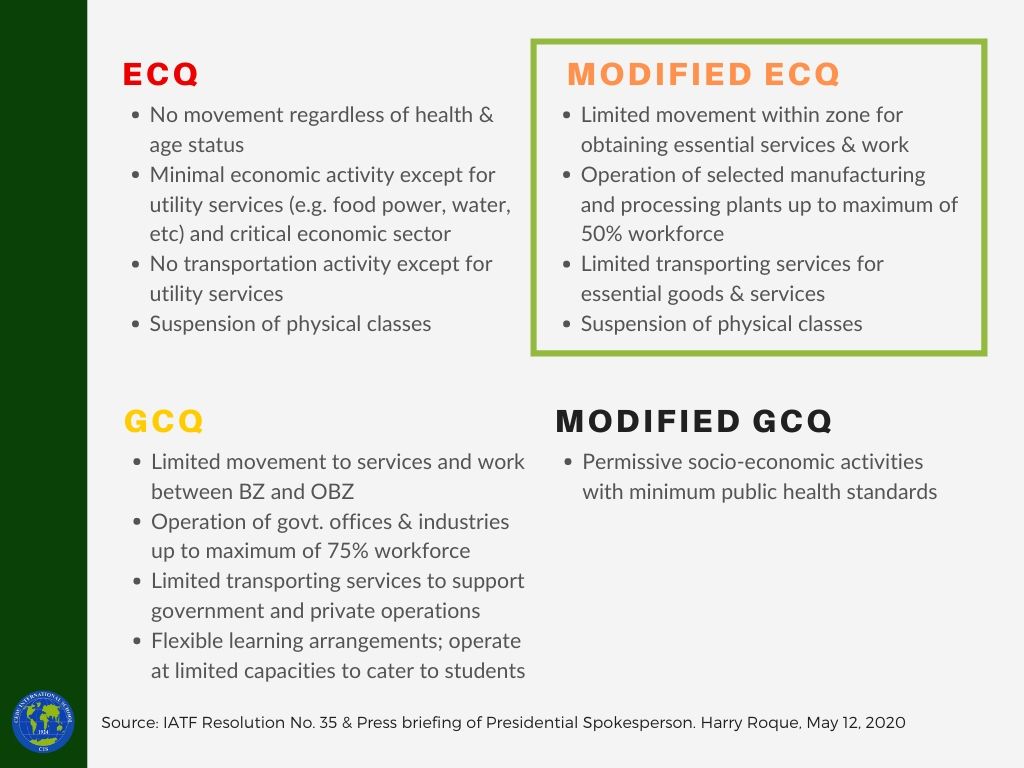
Due to the restrictions of the GCQ , we send details for arranging payment of the 200 pesos Corporation fee to those who express an interest in contributing to the school by becoming a member. This may be done by contacting our Superintendent’s Secretary Ms. Azela Diapana adiapana@cis.edu.ph. If CIS parents would also like to know more about being a CIS Board of Trustee, they may also contact Ms. Azela for details. The deadline for membership and nominations of new Trustees is September 3 at 12 noon.
Elementary News
by Mr. Glenn Davies, Elementary School Principal
Dear Elementary Community,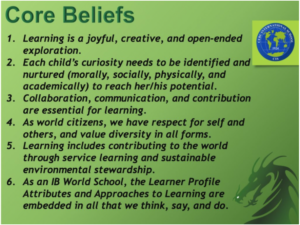
This past week a few of our faculty have been able to access the school campus to make use of the more stable internet, and pick up school resources. Several teachers have even been able to collaboratively plan using the same physical spaces, while also honoring social distancing norms, and taking Covid-19 safety precautions. These planning conversations are examples of how our teachers continue to seek ways to enhance the learning being received by your children, and ensuring the curriculum is being delivered in a way that is consistent with our CIS core beliefs.
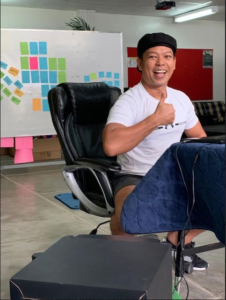
While checking in with some of the teachers who have been able to access the campus, I came across Coach Jay running his live synchronous classes from his PE classroom. Beside his laptop, Coach Jay has set up two large speakers, and he had a selection of balls, skipping ropes and exercise mats, along with a large whiteboard full of PE learning engagements.“I love it!” he said with a big smile on his face. The students are clearly loving his classes as well.
Digital Citizenship and Educational Technology
Digital citizenship is a 21st Century concept that all children are taught as part of the PYP ATL skills that are weaved through their daily learning. It has been exciting to see just how quickly our learners have adapted to the remote learning environment and how proficient they are at using EdTech tools. Looking through history, we are are able to trace the development of technology and the fears that various members of society carried as these tools have gradually impacted education. The article, A History of Educational Technology (an abstract from a larger paper by Dr. Maryanne Berry of Sonoma State University) explains the development from desktop sandboxes, to individual student slates, then on to whole class chalkboards. What is interesting is that with each development in technology, a change in educational pedagogy has also been required as educators adapt to meet the requirements of delivering the curriculum through different tools. As a movement of IB educators (CIS is an IB World School) we are committed to an approach to learning and teaching refered to as ‘Student-Centered’. The Glossary of Educational Reform describes Student-Centered Learning as instructional approaches, and academic support strategies designed to address distinct learning needs, interests, aspirations, and cultural backgrounds of individual students and groups of students, by employ a wide variety of educational methods. These may include modifying assignments and instructional strategies in the classroom through to entirely redesigning the ways in which students are grouped and taught in a school. I really like this video by Teachers in Education which clearly explains the Student-Centered Approach we use at CIS.
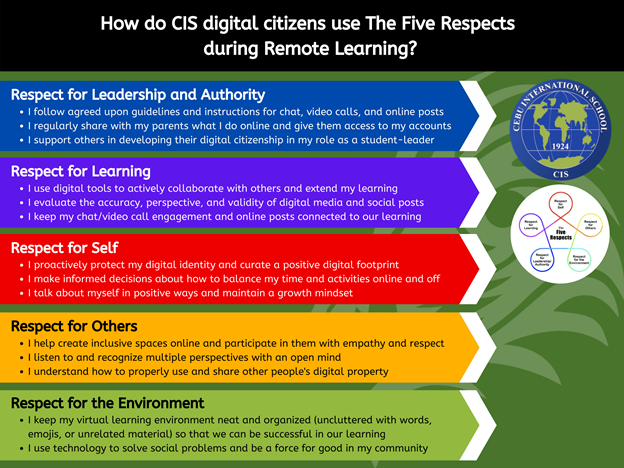
With this increased reliance on EdTech tools to deliver the curriculum, particularly within the remote learning context, it is necessary for all users to understand their rights and responsibilities as a Digital Citizen. CIS has an active ICT Committee who has developed a set of Digital Citizen Responsibilities within the framework of the CIS Five Respects. As these digital Five Respects are an important part of helping each of us manage our online interactions, you may find it valuable to review these with your children over the coming week. We also encourage questions and comments from you about the role of EdTech at CIS.
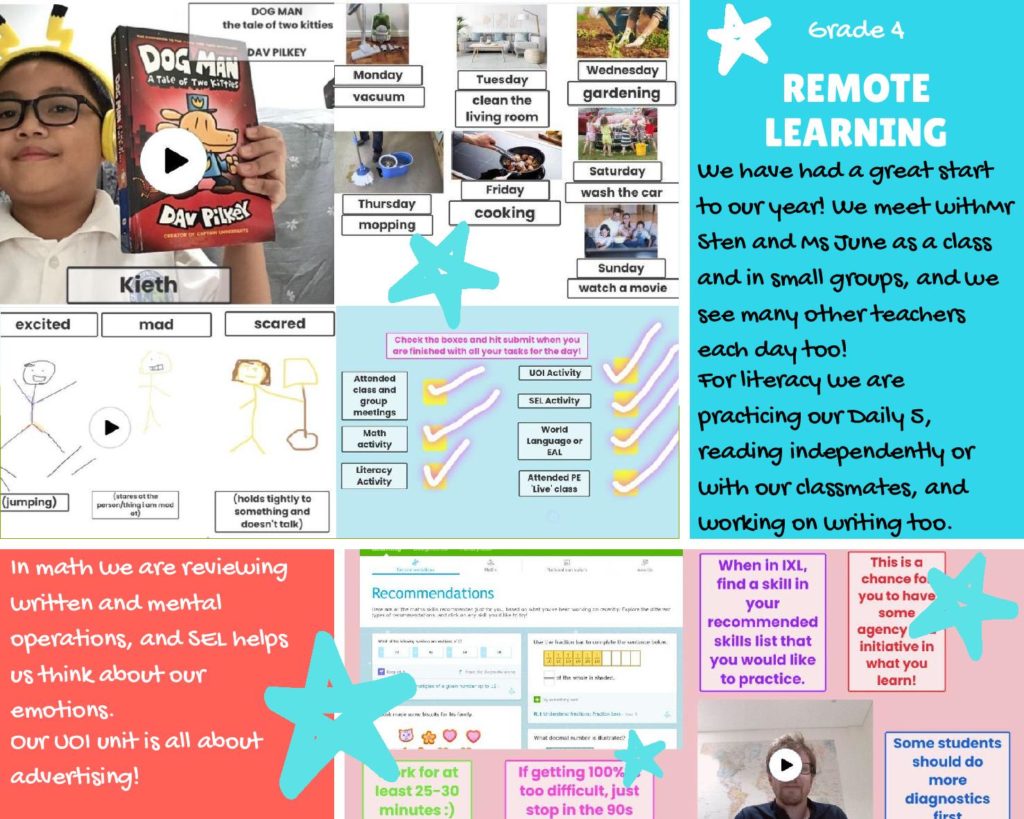
Grade 4 Remote Learning
This week the Grade 4 students have been working at establishing positive learning habits by putting their learning routines into practice. One key part of this is becoming familiar with the Daily 5 Literacy Routine. With support from peers, and from the range of teachers that the Grade 4 students interact with, they have plenty of opportunity to practice these routines. Routine help take care of the small things so that we can use our best brain power for the real work of learning.
Middle and High School News
by Mr. Dale Wood, Middle and High School Principal
Best wishes for a long weekend. Your children definitely deserve it, and, knowing how much support you are providing in your own homes to help them to be successful, you certainly deserve one as well. I wanted to share some of the learning experiences our students have been engaged in over the past week. First, though, we wanted to share a video created by Daniel Monfre, our eLearning Coordinator, containing tips on how to maximize your use of some of the Google tools we are using at CIS. Mr Monfre is a Certified Google Trainer and we think you will find his insights to be very helpful.
Remote Learning Tips for Students and Families
by Dan Monfre, eLearning Coordinator
Hello CIS community. We understand how overwhelming it can be to stay organized during remote learning. This short video will discuss an overview of Google Classroom from the students’ perspective, review Classroom summary settings for guardians, the Classroom To-Do list and Calendar for students, and a brief overview of organization and search tools in Google Drive. We hope these tools will help students organize their work and help parents stay connected with the learning process.
Sections In the video (for quick access):
- Google Classroom & Classroom Summaries (Click here: 00:39)
- Classroom To-Do & Calendar (Click here: 02:35)
- Google Drive (Click here: 03:23)
Guardian email summary settings: https://classroom.google.com/gs
Creating up a Google account: https://support.google.com/accounts/answer/27441
Glimpses of Student Learning in MHS
Language Acquisition is arguably one of the most challenging subject areas to orchestrate and navigate within the scope of remote learning. Our teachers are doing a remarkable job of leading our students in their Language Acquisition classes.
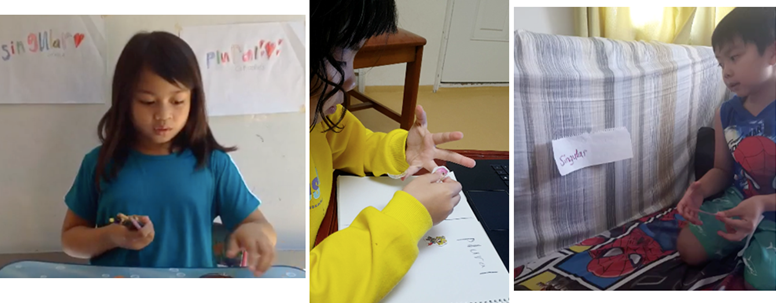
In Mandarin 8/9 students, for example, are mastering their color vocabulary, paired with other frequently used words through reciting the color song. After learning the song, students are expected to recite the color song without looking at the lyrics.
After singing the song, students are recording themselves finding examples of each color and showing them to the camera while saying the color. For example, holding an apple and say “这是红色。zhè shì hóng sè.”
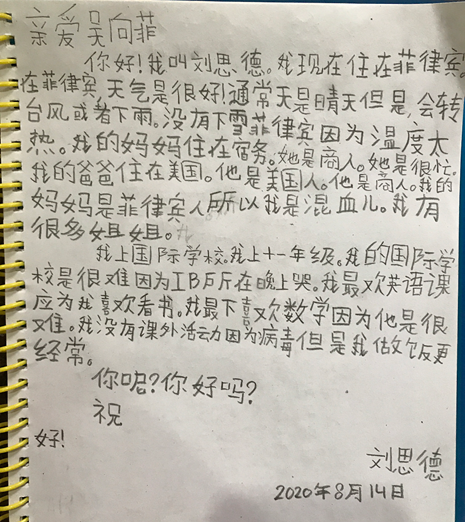
Students are also using the padlet tool to write letters in Mandarin to distant pen pals who are in the Mandarin class of a former CIS teacher. Students in both classes are sharing about their lives, backgrounds, daily routines, hobbies, and also their experiences with remote learning. These two Mandarin classes are also sharing videos on Flipgrid. This kind of interaction makes the communication (i.e. the use of the language) engaging and relevant for students.
Our Grade 12 Mandarin ab initio class (which only began learning Mandarin at the start of last year) is also using the flipgrid tool. They are composing short essays, using an exemplar for guidance, and are recording these essays orally and sharing them on flipgrid. One of the great learning aspects of flipgrid is that classmates can access all of the videos (so it works like a message board) and then can record their feedback on each one, thus making this activity dynamic and engaging.
Our Grade 12 Spanish B class, which is operating at an admirable level of  Spanish fluency, engaged in a debate (in Spanish) on Tuesday focused on one of the primary DP Oral topics of Identities, narrowed more specifically on the subtopic: Concepts of Beauty. The debate questions was: “Should we restrict or censor fashion and the diffusion of fashion to control people’s perception of beauty” (i.e. should we restrict freedom in this area or not). Students had prepared the debate in previous classes including learning very specific vocabulary to enable them to be precise in their arguments. The teacher also engineered and facilitated group meetings to prepare the pros and contras, and also to prepare counterarguments on this topic.
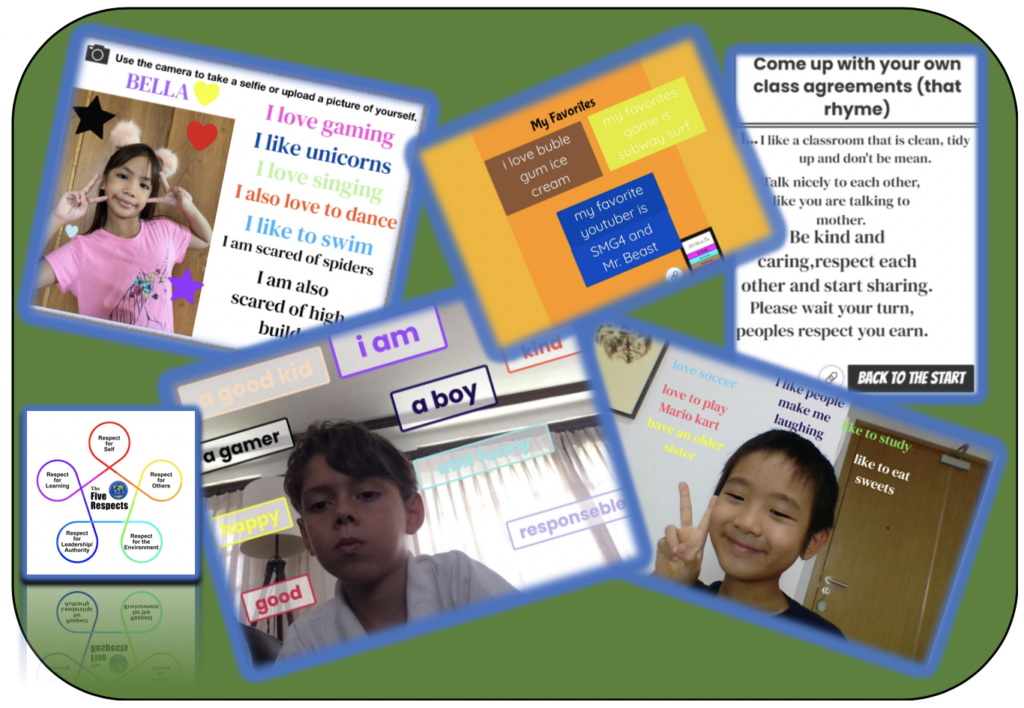
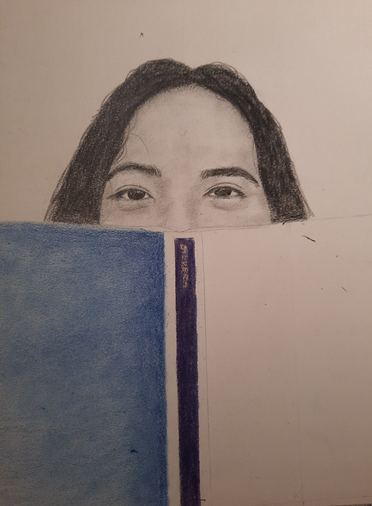
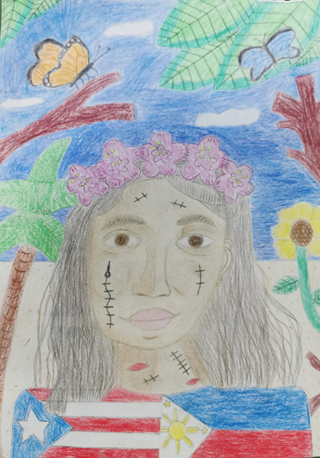
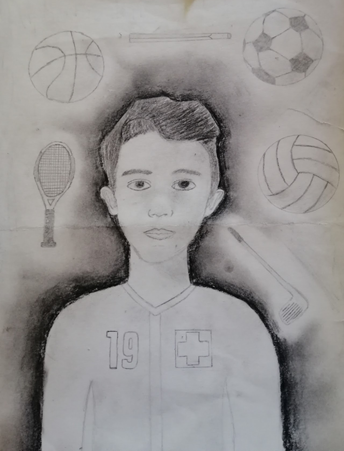
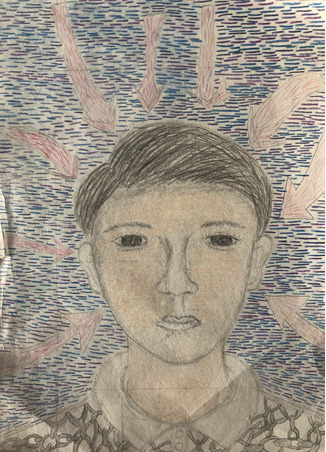
Students in Grade 8 Language & Literature class have been reflectively exploring their individual identities. They have each been tasked with making a collage that represents the different aspects of their identity, using specific criteria established by the teacher:
Here are a few examples:
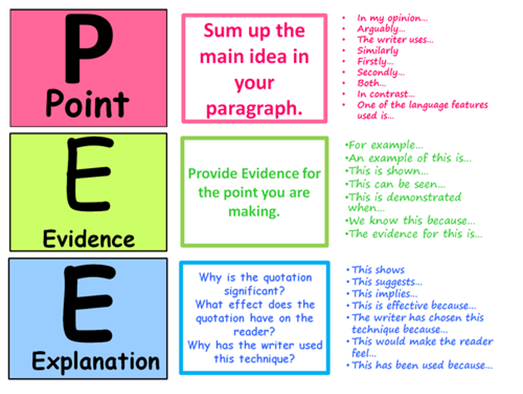
Grade 10 Language and Literature classes have begun reading the novel, The Alchemist. They are learning to implement the “PEE” paragraph writing model (as seen in the graphic below) to develop the quality of their writing, and here, to specifically hone in on specific portions of the text, answering the following prompt:
What point does the old man’s story about the boy in the castle and drops of oil make? (pp. 30-32)
MYP Grade 10 Drama
It can also be a challenge doing drama collectively as we are not able to be physically gathered together. Students instead are working through a unit focusing on monologues, which incorporates many of the same principles and techniques of drama, while allowing students to work independently. The Statement of Inquiry for this unit is: Performance style informs how a character is presented to an audience. For this unit, students have engaged in a process including recording a pre-assessment monologue video which was shared on Flipgrid (also with feedback from their classmates).
Student teams have now collaborated to identify and analyze excellent examples of monologues from a selected group of films; students have been able to choose both the films and the monologues therein, from which they will prepare and perform for their classmates.
Student Reflections:
I understood how a monologue should look as well as how it should be acted out. I learned that it conveys a lot of emotions depending on the story. I learned that it takes practice to perfect a monologue and that you have to be determined to do it so you can get it down nicely. I know that it isn’t easy to perform a monologue but it can be done if you put your heart and drive in it. – Heinz T.
I understood that we need to put a lot of expression into our monologues so that the audience would interpret our characters in the way we want them to. – Brenton L.
College Counselor’s Corner
by Ms. Jenny Basa, College Counselor
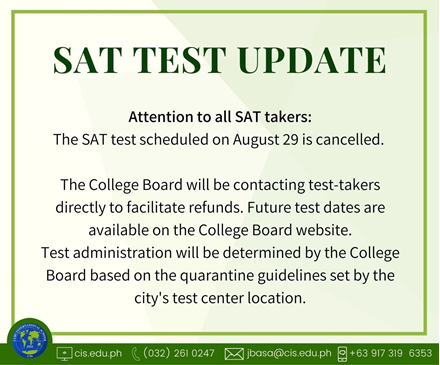
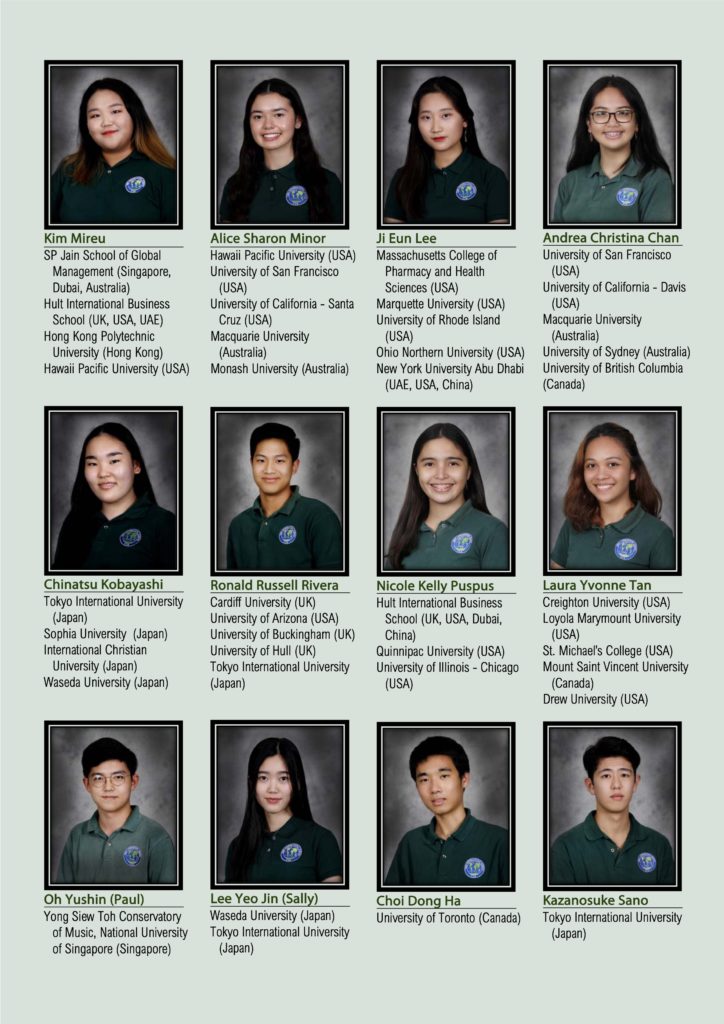
Please note that most universities have gone test-optional. This means they do not require test scores for students to be eligible for admission.
Below are the future test dates which may be subject to change till further notice from the College Board.
| 2020-2021 Test Dates | Test | Registration Deadline |
| August 29, 2020 | CANCELLED | |
| September 26, 2020 | SAT only (no Subject tests) | August 26, 2020 |
| October 3, 2020 | SAT & SAT Subject Tests | September 4, 2020 |
| November 7, 2020 | SAT & SAT Subject Tests | October 7, 2020 |
| December 5, 2020 | SAT & SAT Subject Tests | November 5, 2020 |
| March 13, 2021 | SAT only (no Subject tests) | February 12, 2021 |
| May 8, 2021 | SAT & SAT Subject Tests | April 8, 2021 |
| June 5, 2021 | SAT & SAT Subject Tests | May 6, 2021 |
To register for the SAT, you may click on this link. If you need assistance, please feel free to email Ms. Jenny Basa at jbasa@cis.edu.ph.
Virtual College Visit
Nagoya University
To apply for admission, click here: https://admissions.g30.nagoya-u.ac.jp/
 Tuesday August 25, 2020 at 1:00 – 2:00 PM (PH time)
To join the zoom meeting, click on this link: https://us02web.zoom.us/j/89425897839?pwd=eXFzVFZHSUN4MUdsakFoN21rUURrdz09
Below is a short summary on the international programs offered by Nagoya University (NU).
NU offers four-year undergraduate program in: Automotive Engineering (mechanical or electrical), Physics (science), Chemistry (science or engineering), Biology (science or agriculture), Economics, Law and Japanese in Asia Cultural Studies. Since all the programs are taught in English, no Japanese language proficiency is required at the time of admission. However, Japanese language classes are offered after enrollment.
NU offers up to 100% tuition scholarships to qualified applicants.
University of California
To apply for admission, click here: https://admission.universityofcalifornia.edu/apply-now.html

The UC application is self-reported by the student. Applications are open at this time and can be submitted anytime from November 1 – 30.
UC will be “test-optional” for fall 2021 and fall 2022. Freshman applicants are not required to submit SAT/ACT test scores. Here’s the Link for more information.
What does “test-optional” mean?
- You choose whether or not to submit SAT/ACT scores with your application.
- If you are unable or chose not to submit test scores, your application will still receive full consideration.
You will need to answer 4 out of 8 questions. (Max: 350 words)
- Describe an example of your leadership experience in which you have positively influenced others, helped resolve disputes, or contributed to group efforts over time.
- Every person has a creative side, and it can be expressed in many ways: problem solving, original and innovative thinking, and artistically, to name a few. Describe how you express your creative side.
- What would you say is your greatest talent or skill? How have you developed and demonstrated that talent over time?
- Describe how you have taken advantage of a significant educational opportunity or worked to overcome an educational barrier you have faced.
- Describe the most significant challenge you have faced and the steps you have taken to overcome this challenge. How has this challenge affected your academic achievement?
- Think about an academic subject that inspires you. Describe how you have furthered this interest inside and/or outside of the classroom.
- What have you done to make your school or your community a better place?
- Beyond what has already been shared in your application, what do you believe makes you stand out as a strong candidate for admissions to the University of California?
For more information about the Personal Insight Questions, including writing exercises and worksheets, visit the UC admissions website .
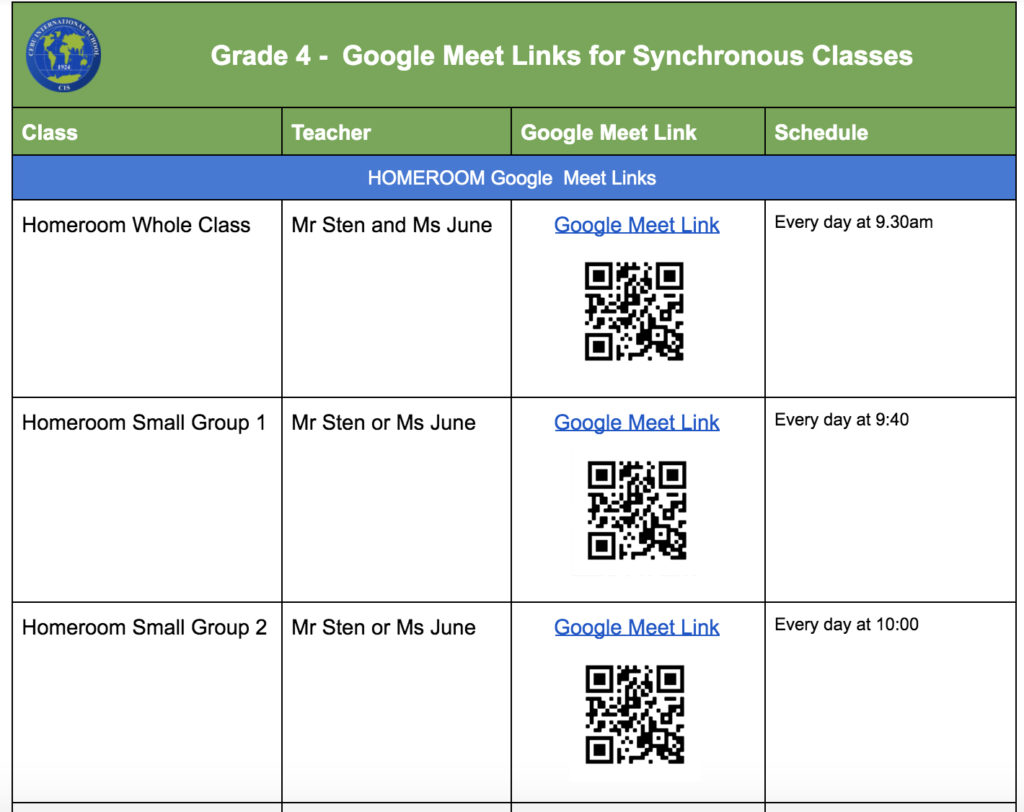 meeting schedule for your child. This schedule contains links and QR codes to each of the Synchronous (face to face) meetings your c

 to be a very busy one indeed. Over the course of the year we have two IB visits scheduled to analyse and evaluate how successful we have been implementing the programme. The first of these visits will be our Consultation Visit, August 27th and 28th. The second will be the Verification Visit in May. Fingers crossed, at the end of this academic year we will be the very first IB continuum school in the Philippines.
 Philippines: 18th (Tuesday) 13:00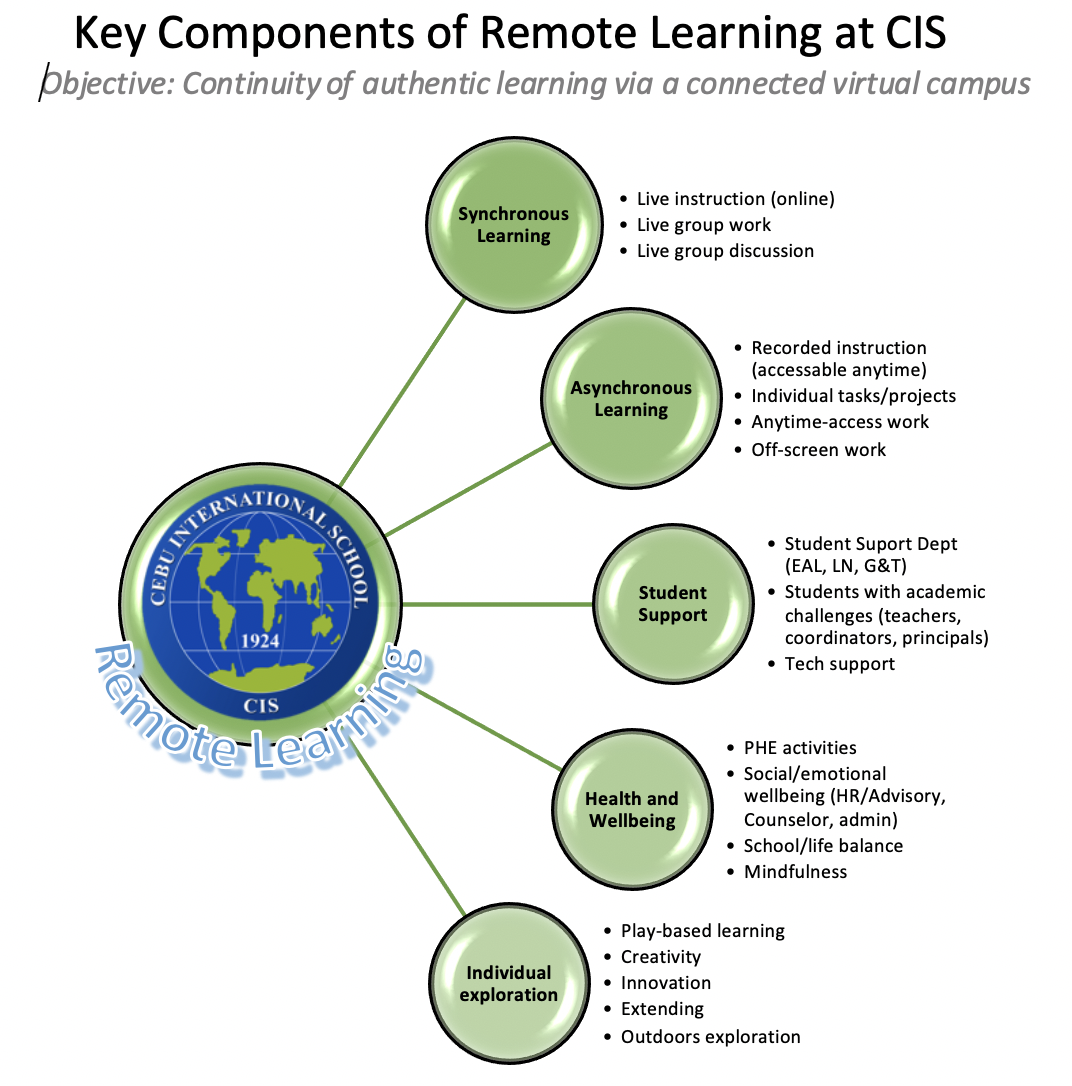
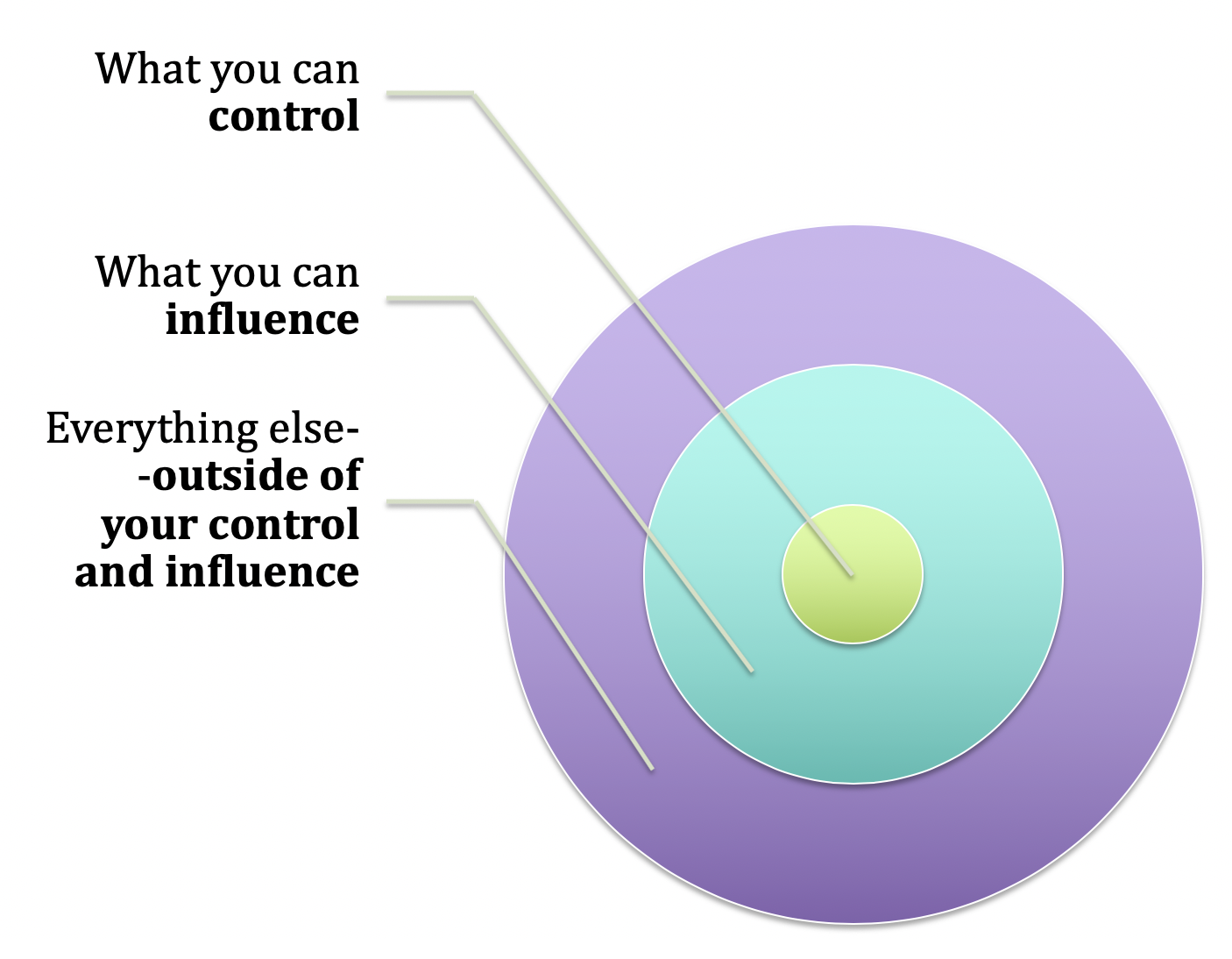
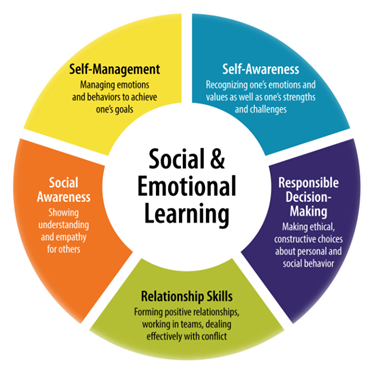
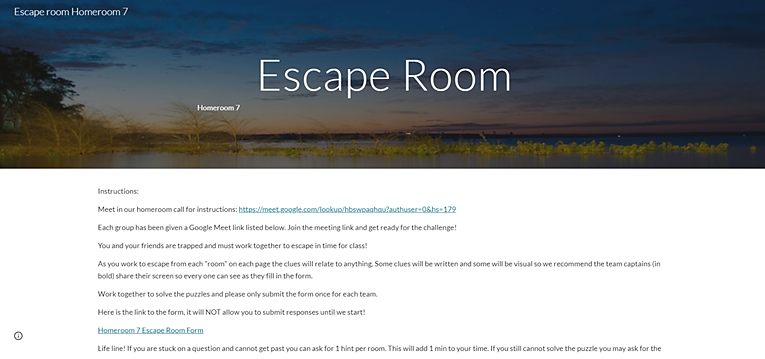
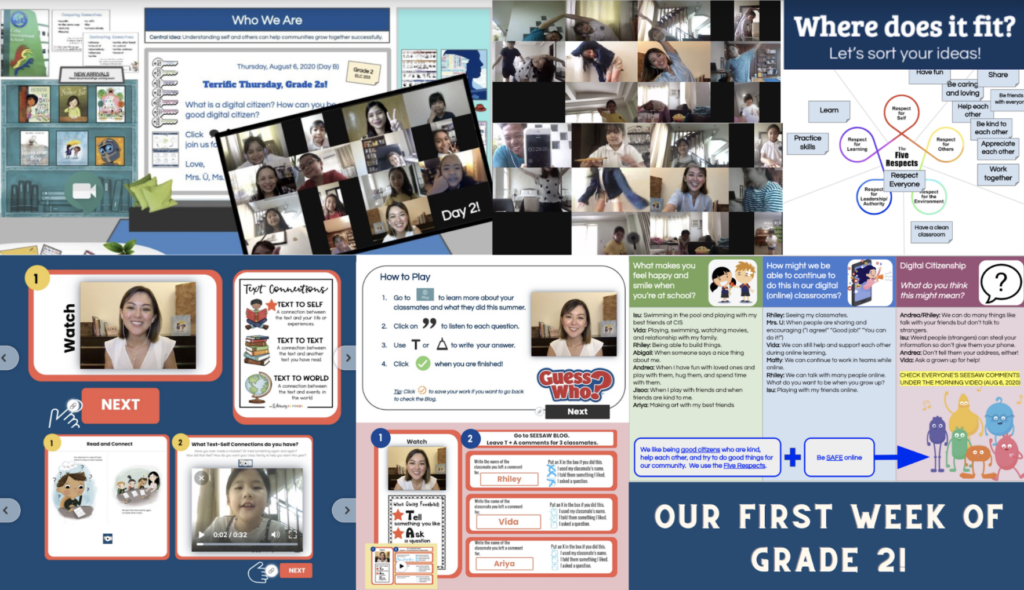
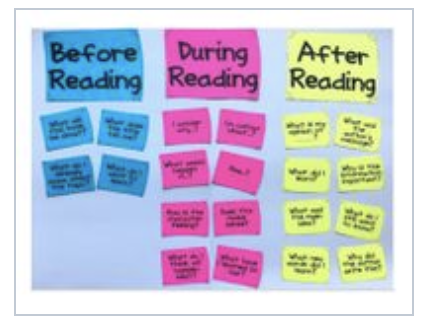 to success. One of these routines has been the Independent Reading Routine. Through the use of the Seesaw platform, the Grade 5 teachers have been able to design asynchronous learning engagements, supported with audio guides to lead the students toward exploring the routines that will enable them to become successful independent learners.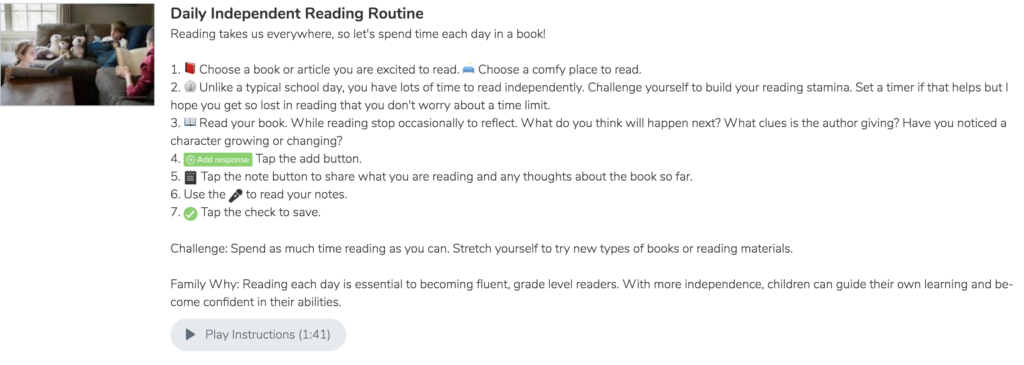
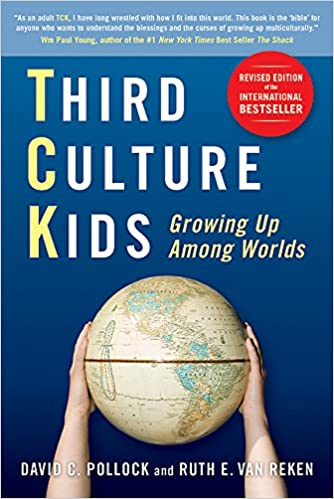
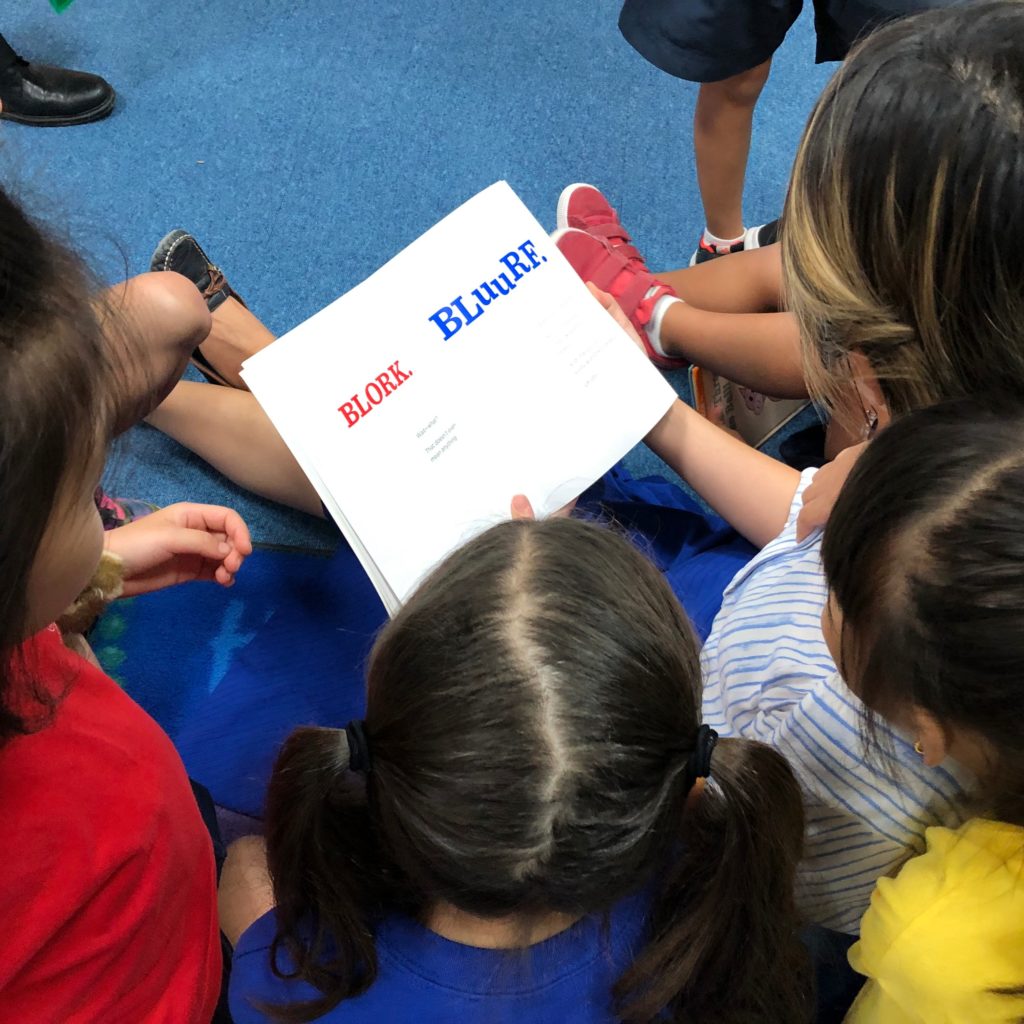 Summer Reading! A great way to pass the time and keep your mind sharp is to enjoy a good book. Families who would like to borrow books for the summer can come to the CIS Media Center to check out books for summer reading. The Media Center will be open Monday to Thursday from 8:30 until 3 pm over the next two weeks (Mon 8-18, June). Families may also use this time to drop off materials they have borrowed during the school year.
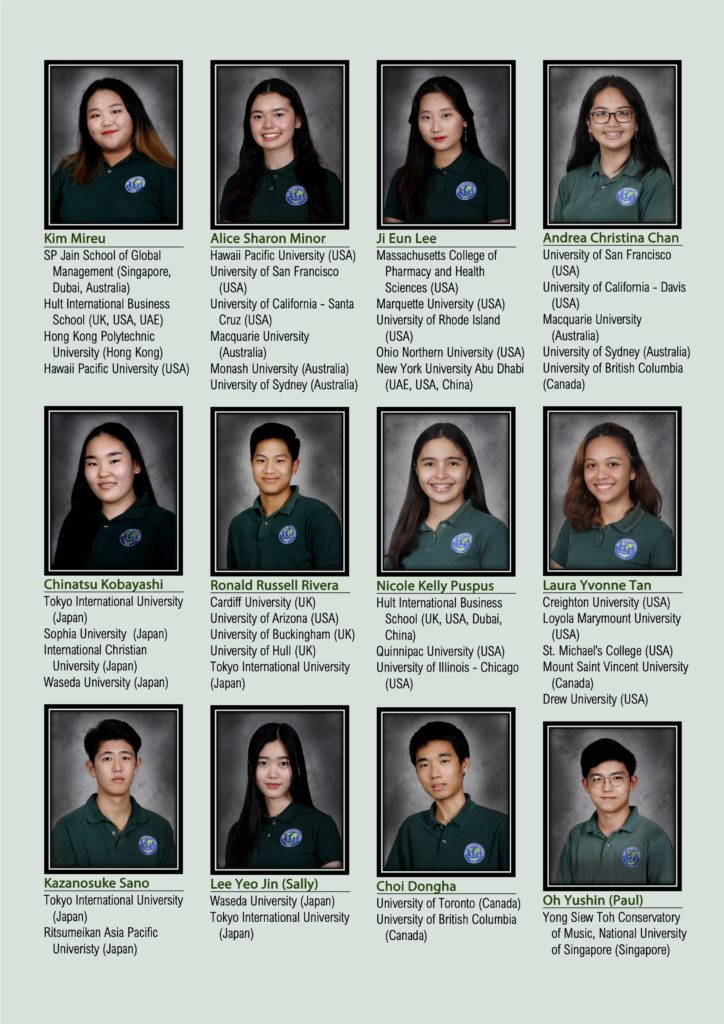
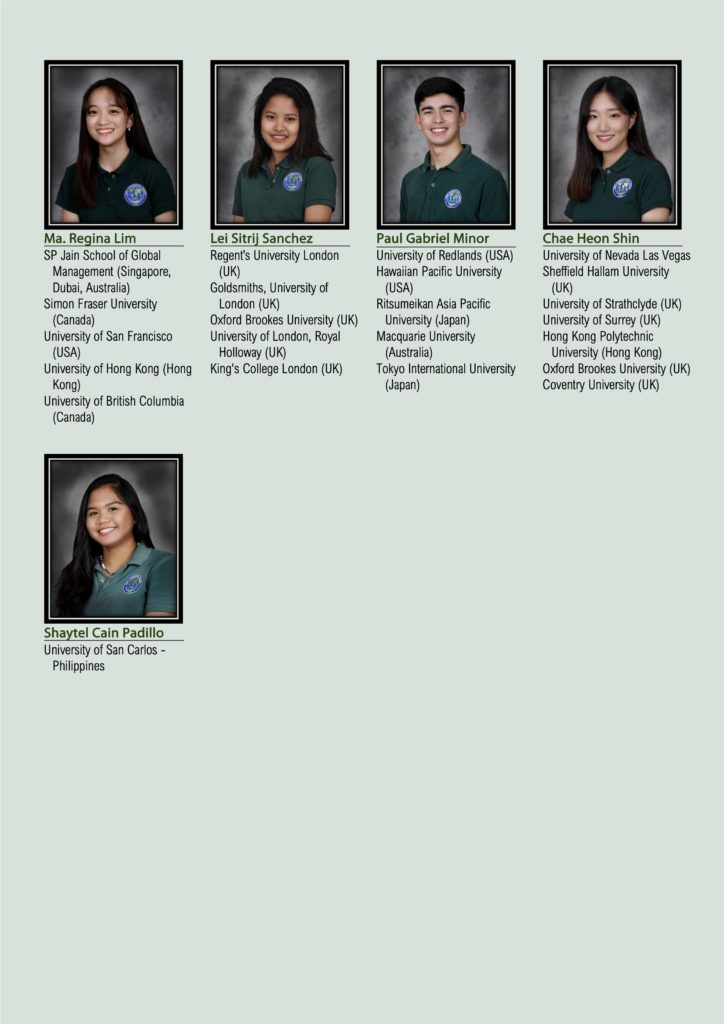
 The challenge of our current situation is that we may not be able to say goodbye in the way we would choose or in a way that gives us a sense of sufficient closure. Especially in light of our circumstances, we should feel satisfied and emotionally at peace that our ending fits the definition of well-rounded and has a sense of closure if the following are true: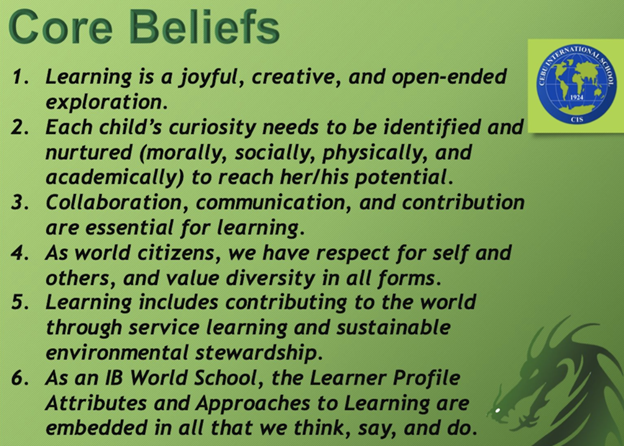

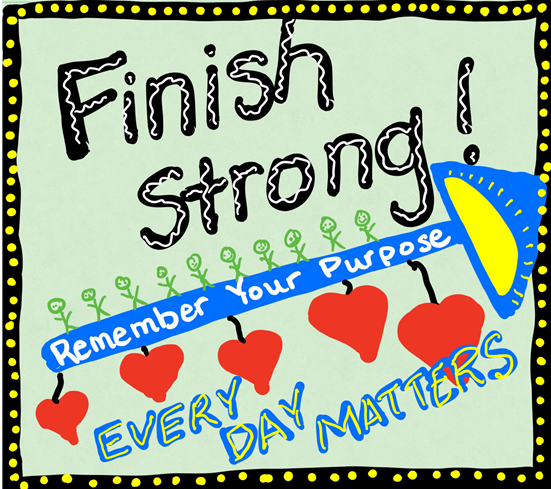 Simon Sinek advises us, it is important to start with “why” in order to unpack and understand the reasons for a particular stance, decision, or course of action. So I pose the question: Why is it important to finish well, to finish strong?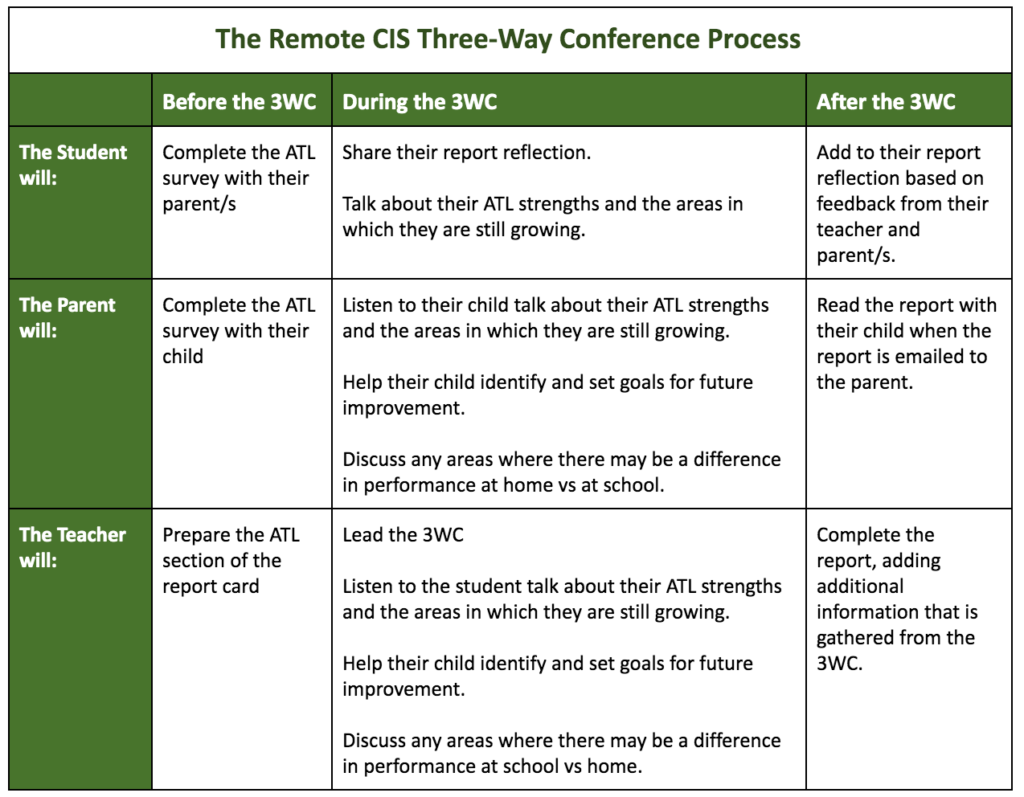

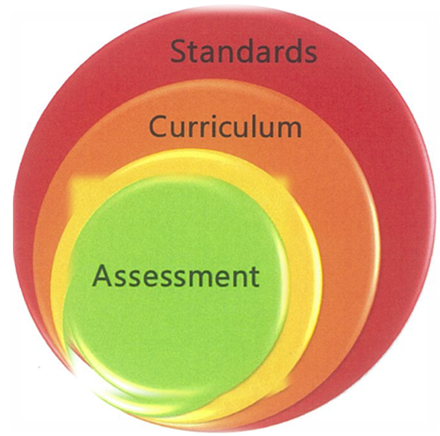 The three essential components which intersect and interact with each other in our educational structure are standards, curriculum, and assessment. Standards are the skills and content we are leading our students to master within their respective courses and, when possible, between them. Curriculum (which comes from the Latin word meaning “a race,” or better- “a running”) is the “course” or path we follow to achieve these standards. Assessment is the way we measure the level of student mastery of those standards. All three pieces are critical, but assessment is the one focused on measuring student learning; as student learning is the central focus of our core beliefs, it could be argued that it is the most important of the three. For example, we might think we have done a great job of teaching a concept or that our students have met certain course standards, but we won’t know whether or not this is true unless our students can demonstrate their skills and knowledge, and this is done through assessment.
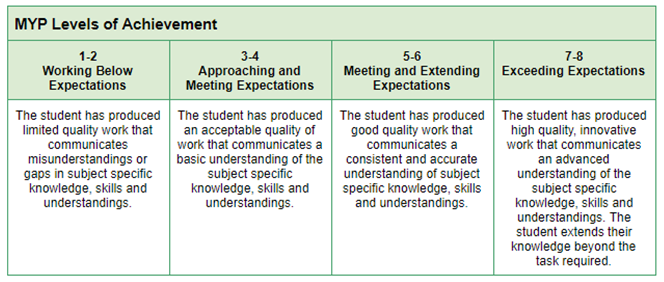
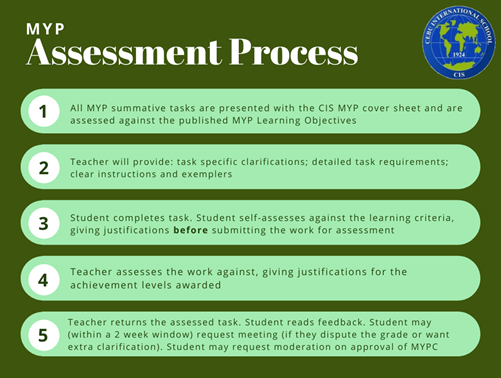 At CIS we have a clear and transpartent process of assessment in place, broken down into 5 clear stages. Key characteristics of the process are: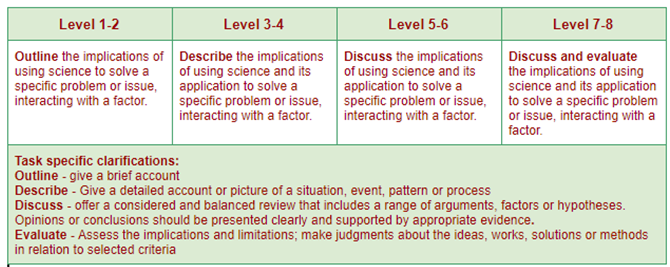
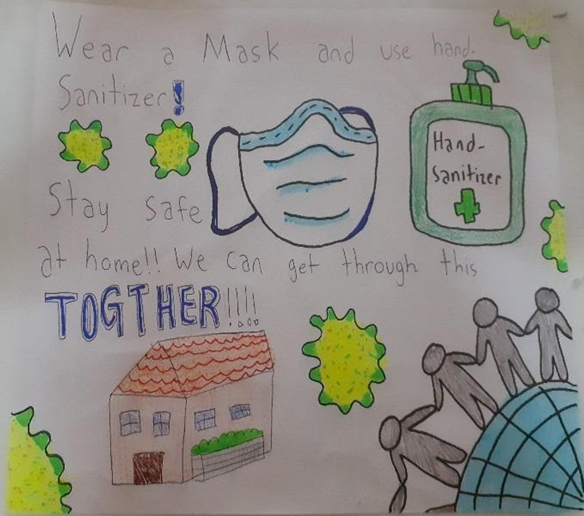
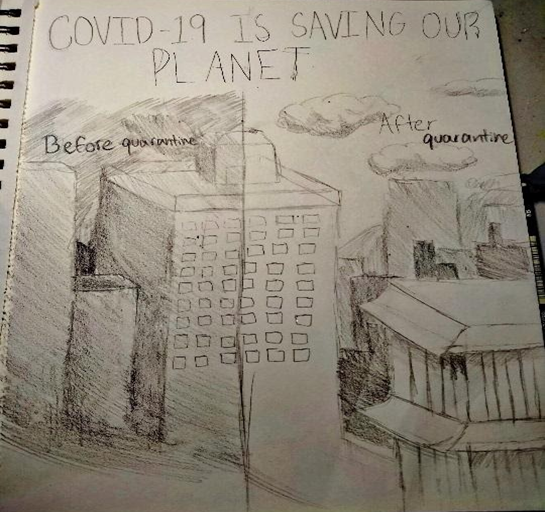
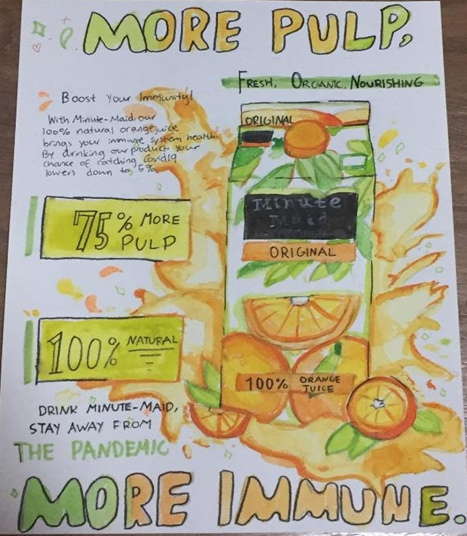
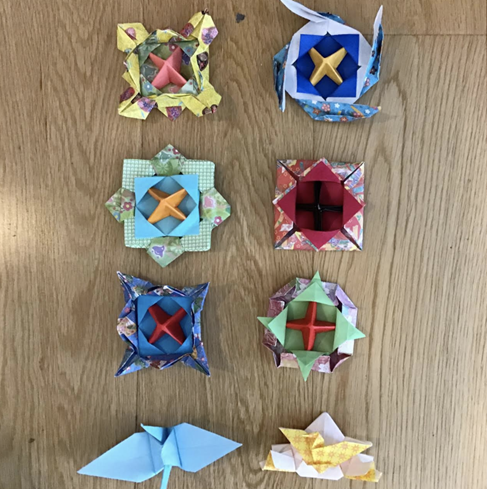
 Just after the Covid-19 situation was gaining intensity and we began doing remote learning, our Grade 10 Art Class started a project creating illustrations relating to the crisis which would provide a positive impact on their viewers. Students were free to explore any concept, art style, process, or technique and they had the option to choose the medium, whether digital or traditional. The goal was for our students to offer a counterpoint to the media which tends to report on this crisis with negativity and stoking our fears. Several weeks later, the students have completed their pieces and we want to share them as a source of inspiration in the midst of these unsettling times. – Sofia
 Our purpose for this piece was to try and inspire people during our time of coronavirus. I drew inspiration from the fact that even in quarantine, many people sing together despite being confined in their own buildings and rooms. I illustrated that in my artwork by having a cityscape stripped of colour. Having a bustling city depicted devoid of life expressed the apocalyptic feel of this situation. However, in the midst of all the muted colours and somber mood, there is a bright musical song that brings hope to the people. – Luna
 Since Corona has become a worldwide problem, I set the background theme as space. The tree represents the blood in the lungs because the main symptoms of Corona are related to the lungs. The reason for the color white is because white symbolically is clean, clear, nice, and it shows and represents healthiness. The flowers on the bottom are called Spider Lilies. The red spider lily represents passion, independence, and reunion. The blue spider lily means “until the day we meet again”. I chose to draw this flower because it is beautiful and the meaning of each flower shows the feeling of all people in a positive way. – Jodi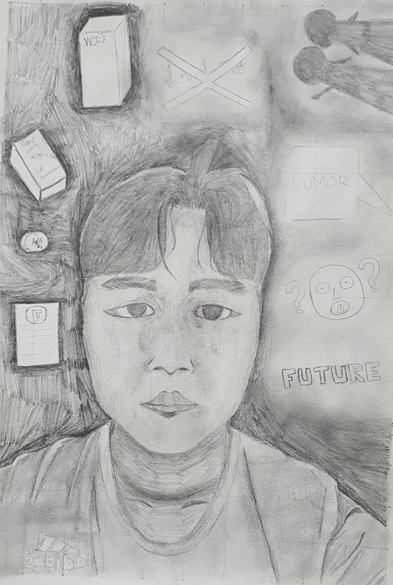

 Our Grade 6/7 Music Class has been experimenting with a timely piece of music entitled High Hopes. Students have been tasked in their unit to learn about triads as a type of musical chord and to construct and perform different triads along with a bass line. Students have previously created arrangements of different pop songs with an awareness of the harmonic structure founded on the bass line and chord progression, as well as learning how to analyze the overall structure of a song including the different sections (e.g. verse, chorus, bridge, etc.).
 This week we received the news many of us were hoping would not be given, but were expecting, that our lockdown would be extended. Although we remain separated, CIS continues to find ways to remain connected. This past week Coach Jay’s Dance-Off has been a wonderful connection point. I am grateful for all the work that Coach Jay and Ms. Stefan
 Students practiced all of the dance steps seen in the linked video over several days, making sure they mastered all the steps prior to making their own video. They then uploaded their individual videos to flipgrid and submitted a screenshot to their teacher as evidence that they had completed the challenge. This was just one of the activities students were able to log for their weekly activity sheet.
 Grade 11 English HL