


MHS Principal’s Corner
by Mr. Benjamin Martin, Middle & High School Principal
The Power of Self-Efficacy
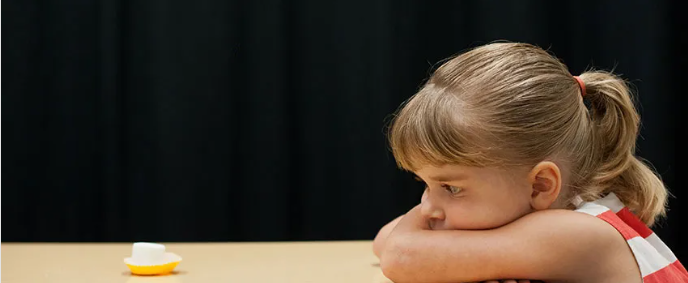
This year, our grade 9 students started off their year by learning the lyrics of the popular song, “This is Me” from the Greatest Showman. This was part of their first social and emotional learning unit centered on building self awareness through self-efficacy.
What exactly is self-efficacy? Cambridge dictionary defines self-efficacy as a person’s belief that they can be successful when carrying out a particular task. I think the key word here is belief and specifically the ability to believe in ourselves.
In her article for verwellmind.com, “Self Efficacy and Why Believing in Yourself Matters”, author Kendra Cherry explains that how you feel about yourself is a big determiner in how successful you will be at achieving your goals. This is because people with a high self-efficacy tend to recover from set-backs and welcome challenges while those who have a low self-efficacy often avoid challenges or focus on the idea of “failure” versus the idea of “growth”.
 Cognitive psychologist Albert Bandura also wrote about the necessity of having a strong self-efficacy in his book, “Self Efficacy in Changing Societies” and summarized that because our beliefs help shape our thoughts and actions, naturally starting with a belief in ourselves and our abilities to meet our goals is more advantageous than when we feel we aren’t good enough or strong enough to eventually meet our goals before we even start.
So how can we build a stronger sense of self-efficacy? There are many ways such as celebrating our small victories, observing others, and transforming our negative self-talk.
One activity that might be a good place to start comes from Big Life Journal:
Divide a sheet of paper into three columns.
In the middle, we list negative self-talk we find themselves using. Examples might include, “I can’t do this,” “I’m not smart/cool/funny enough,” or, “I’m just too shy/boring/bad at school.”
In the column on the left, we list situations or thoughts that trigger the negative self-talk we wrote in the middle column. For example, thoughts about being “dumb” or bad at school may be triggered by earning a bad grade or comparing their own performance in school to their peers.
Finally, we write a positive statement in the right column to replace the negative statement on the left. We could simply reverse the statement on the left (e.g., “I can do this,” or, “I’m good enough”). Alternatively, We can use a growth mindset statement, such as, “I can improve my grades and get better at school if I study more and ask for help when I need it.”

Starting with self-efficacy and then following that up by showing resilience and reflection undoubtedly will have a positive impact on our eventual successes in life. Even Sesame Street and Micheal Buble know that!
Upcoming events of note
- Tue, Sept. 17: CIS Corporation Annual General Meeting
- Fri, Sept. 20: HAD 1 (AM only-no classes/PM Faculty in-service)
- Sept. 21-27: CIS/WASC Accreditation Visit
- Sept. 22-25: IB Evaluation Visit
- Tue, Sept. 24: Parent Coffee Morning (PTA)
- Fri, Sept. 27: Grade 12 DP Recommitment
- Fri, Oct 4: End of Quarter 1
Please refer to the CIS Event Calendar for the complete calendar of school events.
Exploring Rhythm and Beat in the Early Years Music
by: Ms. Marie Vic Briones, PYP and MYP Music Teacher
In the Early Years’ first unit entitled Moving to Beat and Rhythm, and under the transdisciplinary theme “Who We Are,” students have begun exploring rhythm and beat. The unit’s central idea is, “Exploring beat and rhythm helps us understand their form, adapt our movements to changes in tempo and volume, and encourages responsible use and care of musical instruments to enhance our performance and musicianship.” Through this exploration, students begin to see how rhythm shapes their musical experiences and personal expression.
Form, Change, and Responsibility
The first Line of Inquiry focuses on Form. Here, our Early Years students are introduced to the basics of reading and interpreting stick notation. This rudimentary skill allows them to visually represent sound patterns, helping them understand how rhythmic patterns are constructed and, later, how to translate them into sound.
 In the second Line of Inquiry, the focus shifts to Change. Students discover how the same rhythmic patterns can be expressed differently depending on the musician’s intention. Using stick notation, they explore how rhythms can be played slow or fast, loud or soft, and how these changes affect the emotional and expressive quality of the music. This inquiry helps them understand how rhythm can be adapted to reflect various moods and expressions.
The third Line of Inquiry emphasizes Responsibility. Students develop essential skills in using musical instruments mindfully and carefully. Through explorations and learning engagements on musical instruments, they learn to respect them by handling these instruments properly, showing awareness of how their actions affect the sound and long-term function of the instrument, and fostering an early sense of respect for learning and the learning environment.


Translating Visuals to Sound: Developing Communication Skills
 Since our young musicians have been learning how rhythm is visually represented, they are now slowly gaining confidence in interpreting these rhythmic symbols and translating these visuals into sound through their instruments. As they bring these symbols to life, they gain a deeper understanding of how images, sound, and language interact to convey musical ideas, thereby strengthening their Thinking and Communication Skills. Through these engagements, they begin to understand basic music theory and notation.
 The Five CIS Respects, Social Skills, and IB Learner Profile in the Classroom
Throughout the unit, the CIS Five Respects, particularly Respect for the Learning Environment and Respect for Others, are emphasized. Our EY musicians demonstrate these values by handling instruments with care and by listening to and valuing each peer’s contribution. This reflects the development of Social Skills and the IB Learner Profile, Caring. Highlighting the importance- and the joy- of learning in a group and setting the tone for the rest of the year, the unit helps build a sense of community and identity (Who We Are) for our Early Years learners in the classroom.
Grade 8: MYP Science
by Ms. Christine Enrile, MYP Science Teacher

The concept of energy and its varied applications is being explored in the unit, “On the go!”. The students are engaged in several learning activities to learn the different forms of energy, modes of energy transfer, and their transformation in different natural and manmade systems. Several applications of kinetic energy, gravitational potential energy, heat, and specific heat capacity are also covered.

The students showcase their understanding by making innovations and improvements in the design of parachutes. In teams, they experiment with one variable to increase the drop time of the parachute, reducing the impact of the fall. These variables include length and type of string, and size, material and orientation of the canopy.
Grade 11 & 12: DP Mathematics
by Ms. Maria Victoria Bacus, G11/12 Math Applications and Interpretation (AI) SL Teacher
Exploring Sequences and Series and Investigating Correlation
Year 1: Exploring Sequences and Series – The “Calculator Challenge”
The IB DP Math students have begun their journey in the Applications and Interpretation Standard Level course. This course is designed to allow  students to apply mathematics in real-world contexts, with an emphasis on modeling with functions, statistics, and the use of technology. As students delve into the concepts of Sequences and Series, they are learning to recognize patterns and examine various applications of arithmetic and geometric sequences and series in real-life situations. They have explored topics such as calculating salary increases, price changes, inflation, and population growth or decline. Through these activities, students deepen their understanding and develop their skills in utilizing graphic display calculators. They have practiced efficiently computing the sums of various sequences, both by substituting values into specific formulas and by effectively using the applications on their TI-84 calculators.


Additionally, they have started setting SMART goals for themselves as they continue to familiarize themselves with the IB DP Math course and summarize their action plans.


 Year 2: Math Exploration and Correlation Investigation
The IB DP Math AI SL students engaged in activities that demonstrated their understanding of the statistical tests of Pearson’s correlation coefficient and Spearman’s rank correlation coefficient. They reviewed scatter plots to check for linear relationships between two variables related to sports statistics, social media trends, and environmental and health data.
The Correlation Challenge
The students then analyzed the results and interpreted the calculated values based on the given contexts.
They reflected on the effects of outliers on the correlation between two variables and considered which correlation coefficient would be most effective in each situation. This activity provided valuable insights and led to thought-provoking discussions on the implications of their findings, particularly the distinction between correlation and causation. It not only enhanced the students’ understanding of correlation but also developed their critical thinking and analytical skills, preparing them for future statistical studies. The students were able to connect mathematical concepts to real-world situations and explore the practical applications of these statistical tests in various fields, such as psychology, biology, and economics.
College & Careers Counselor Corner
by Ms. Jenny Basa, College Counselor

Thank you to all those who attended and supported the very successful Cebu World University Fair 2024!
As part of our Centennial celebration, CIS hosted its first university fair today. We welcomed representatives from 52 institutions across 12 different countries, including those from North America, Europe, Asia, and Australia. Our heartfelt thanks go to the parents and students of CIS, as well as from other schools in Cebu City, for their active participation in making this event a success. A huge shoutout to EducationUSA of the U.S. Embassy in Manila for delivering an insightful session on “Study in the USA.” Your support added immense value to the event, providing students and parents with valuable information about pursuing higher education opportunities in the United States.
This event provided an excellent opportunity for students and parents to engage with university representatives and explore a wide range of options for studying abroad.
 Alumni Chats – Centennial Edition


Invitation from Brown, Columbia and Penn
Join us to learn more about Brown University, Columbia University and the University of Pennsylvania!
Admissions representatives will hold a public information session for students and families about their respective universities and the highly selective college admissions process.
Topics will include: academic programs, campus activities, admissions policies, financial aid and international student life.
Manila
Joint Presentation with Brown, Columbia and Penn Friday, October 11 at 4:30 – 6:00 p.m.
International School Manila, Little Theater
University Parkway, Fort Bonifacio
Enter campus through GATE 3
RSVP by October 10 by clicking here
- Space is limited and registration is REQUIRED.
- In order to provide this opportunity to as many students as possible, each student is permitted to bring a maximum of only one guest.
- On the registration form, you will be required to provide your car license plate number in case you intend to drive to ISM’s campus. If you drive to campus and this information is not provided at the time of registration, you will be unable to access campus.
- If you have questions about the information session, please email ugrad ask@columbia.edu.
- If you have signed up to be on the mailing lists of multiple institutions, you may receive more than one copy of this invitation.
SAT Update
August 2024–June 2025 SAT Registration Is Now Open
| Test Dates | Registration Deadlines | Deadline for Changes, Regular Cancellation and Late Registration Deadlines* |
| October 5, 2024 | September 20, 2024 | September 24, 2024 |
| November 2, 2024 | October 18, 2024 | October 22, 2024 |
| December 7, 2024 | November 22, 2024 | November 26, 2024 |
| March 8, 2025 | February 21, 2025 | February 25, 2025 |
| May 3, 2025 | April 18, 2025 | April 22, 2025 |
| June 7, 2025 | May 22, 2025 | May 27, 2025 |
*Additional Fees apply
To register for the SAT, you may click on this link. If you need assistance or have any questions, please feel free to email Ms. Jenny Basa at jbasa@cis.edu.ph.

 A crucial aspect of goal setting is regularly checking in and reflecting on progress. This practice helps students stay on track and make necessary adjustments to their goals and strategies. Here are some prompts that teachers and parents can use to engage students in this reflective process:


 The Writing Process


 On Tuesday 27th of August, we held our first
  CIS, that not every school has. These are key areas that make CIS stand out as a high-quality education provider. Parents, please come to our future Parent Coffee meetings (every last Tuesday of the month – see the calendar for specific days), as in addition to a variety of PTA activities, we will occasionally explore these areas in more detail, as some may not know what they are (such as the IB ATL and LP in the slide below) if they have not been in an IB World School before!
 We launched Book Week with a grand celebration of all things literary! Last week, everyone participated in the beloved tradition of ‘Drop Everything and Read’ each day. Students and teachers from elementary to high school embraced the joy of reading together. This collective embrace of reading helps cultivate a shared passion for books across our entire community!
 Last Tuesday, August 20, our students had the incredible opportunity to engage with a diverse group of guest speakers from various fields and backgrounds, including a publisher, a shoe designer, and a diver. These interactions offered students firsthand insights into the unique journeys and experiences of each guest, much like diving into the pages of an inspiring book. The event broadened their perspectives and sparked curiosity about the world beyond the classroom. We are excited to continue providing opportunities that connect students with real-world stories and knowledge!
 Last Wednesday, August 21, our lower elementary students enjoyed an enchanting storytelling session with a special guest who brought beloved books to life through engaging read-alouds. The young students were mesmerized by the magic of storytelling, discovering the joy of listening to captivating tales. This interactive event not only sparked a love for reading but also showcased the transformative power of storytelling.
 The week concluded with a special in-person Book Talk, a refreshing change after years of holding it online. Students had the privilege of meeting Ms. Raynie, who shared her deeply personal journey in writing her debut book, set to be published in September. Her story, filled with heartfelt experiences and emotions, resonated with the students and inspired them to start on their own creative journeys. From ES to MHS, students eagerly began crafting their stories, thoughtfully developing characters, themes, and genres. Inspired by Ms. Raynie’s passion, they are determined to complete their stories and even aspire to publish their own books.
  This week’s Buddy Reading initiative was a fantastic success! Students from different grades paired up to explore a diverse range of books, sparking lively discussions and celebrating our vibrant community of cultures. The collaborative experience highlighted the richness of our literary world and the joy of discovering new stories together.
 Get ready for Spirit Day on September 6th, where students will bring their favorite book characters to life! Dress up as a beloved character from any book and join us in celebrating the magic of storytelling. This fun and creative day encourages students to express their love for literature and showcase their favorite characters through imaginative costumes. Let’s celebrate the joy of reading.
  Explore creative ways to enjoy reading in unique positions and locations this year! Ensure your safety and comfort while taking your photo, and remember to submit your entries through the
 Join us for the Book Cover Makeover Challenge and unleash your creativity by redesigning book covers! Each homeroom is invited to select a book and recreate its cover using photos of students and teachers. Please review the guidelines and submit your entries by the end of the day on Friday, August 30th. We look forward to seeing your imaginative and artistic book cover creations!
 Visit the media center to explore our “Guess Who’s Reading”. Try to identify the teachers and staff hidden behind the books in the photos. Drop your guesses into the entry box, and students with the most correct answers will win a prize. Submit your entries on Friday, August 30th. Good luck!
 Continuing with the theme of Literacy month, we are off to the races in Language & Literature. Grade 6 is currently exploring “How art can share impactful messages” through their exploration of Poetry. The Grade 7 class is exploring how effectively a writer can capture the self-expression of their subject through interviewing. The Grade 9s are currently exploring how stories can connect people to the social history of countries through the exploration of short stories from around the world with a focus on The Philippines.


 In this unit, students are learning about teamwork, cooperation, and communication while playing fun and exciting games. Each student has been assigned different roles during the activities, and they are doing an amazing job working together to achieve their goals.


 community?
 Next, students explored how their personal goals align with our school’s
  As the year progresses, our Grade 5 students will continue to explore what it means to work together toward common goals. They’re discovering that leadership is not just about taking charge but about empowering the entire group to move forward. This understanding is central to our first unit of inquiry under the theme “How We Organize Ourselves,” where students will investigate different systems of governance and how communities address human needs, rights, and responsibilities. These explorations are essential for their growth as global citizens.


 Welcome to our first Newsflash blog post as a 100-year-old school! We have had a smooth start to the new school year, and it has been a pleasure welcoming new and returning students, teachers, and family members onto campus to commence the year.


 The Grade 3 inquirers, delved into our last unit, under the transdisciplinary theme, How We Express Ourselves, with music in their ears! They kicked off their exploration of sound with a listening game. Their challenge? Guessing the sounds of clapping, snapping, and stomping! They were amazing at it! Inspired by the game, the students suggested a quieter activity: listening to the world around them. Once they settled in, they were surprised by how many sounds they could hear! From birds chirping to the opening and closing doors, and even the pitter-patter of footsteps, their ears picked up on it all.
 Using the scientific method, the Grade scientists conducted workshops to investigate the function of sounds. In one experiment, they saw how different parts of our body work together to produce sound. They inflated balloons to represent lungs. By manipulating the balloon’s opening, they discovered how different sounds are created, just like when we speak with our voice boxes!


 The EY 2/3 students prepared an immersive experience of their inquiry about lights and shadows for community members to explore. This immersive experience includes the EY shadow play, neon lights dance, shadow-making stations, and fun experiments.


 The Grade 4 filmmakers have been hard at work creating original films that feature the stories of Malala, Anne Frank, and the Civil Rights Movement and Tuskegee Airmen. They wrote the script, filmed, and directed the cinematic films themselves to share their understanding of how access to human rights impacts opportunities in a changing world.
 The Grade 5 junior pediatricians have been creating presentations and brochures for their medical conference to share their learning about the different body systems and management of social-emotional changes. Their medical conference will focus on physical transformations, emotional, social, and cognitive changes, and how to be responsible during adolescence.


 Dates: June 10-21, 2024
 Location: Cebu International School, Pit-os
 Registration form:
  More information:


 Building on our understanding of shadows, students became curious about how the type of material affects shadow formation. This led us to introduce the properties of light: transparent, translucent, and opaque. We defined these concepts as follows: